First-Time Buying In Reading MA And Nearby Towns
June 4, 2026
June 4, 2026
If you’re buying your first home north of Boston, one question can shape everything: Should you focus on Reading, or widen your search to nearby towns? That choice matters even more in a market where prices sit above the Massachusetts median and the right home can move quickly. The good news is that with a clear plan, you can compare your options with more confidence and less stress. Let’s dive in.
Reading, North Reading, Wilmington, and Andover all attract buyers who want a suburban setting with access to jobs, major routes, and established town centers. At the same time, they are not all the same when it comes to price, housing choices, or commuting options.
Spring 2026 data shows Massachusetts at about $652,846 for the median sale price. By comparison, the median sale price was about $985,000 in Reading, $724,126 in North Reading, $795,000 in Wilmington, and $866,000 in Andover. For a first-time buyer, that makes it especially important to match your budget and daily routine to the town that fits you best.
If you are early in the process, it helps to think in ranges instead of chasing one perfect town. Based on current sale-price data, North Reading and Wilmington may feel slightly more reachable, while Andover and especially Reading sit at higher price points.
That does not mean one town is automatically better than another. It means your buying strategy should reflect what you can comfortably afford, what type of home you are open to, and how much competition you are likely to face in each market.
Here is a quick view of how these towns compare by recent median sale price.
| Town | Recent median sale price |
|---|---|
| North Reading | $724,126 |
| Wilmington | $795,000 |
| Andover | $866,000 |
| Reading | $985,000 |
For many first-time buyers, this kind of side-by-side view helps narrow the search faster. If Reading is your top choice but the numbers feel tight, nearby towns may create more breathing room without pushing you too far from your preferred area.
Price is only one part of the decision. Transit access is one of the biggest differences among these towns, and it can affect your daily routine as much as your housing payment.
Reading, Wilmington, and Andover are rail-served or transit-oriented MBTA communities. North Reading does not have commuter rail within town, so buyers there often rely on nearby stations and local transportation options.
Reading offers a downtown MBTA commuter rail station, MBTA bus service to Malden Center, and convenient access between I-93 and I-95/Route 128. If your routine depends on rail access or you like the idea of a more established downtown pattern, Reading stands out.
That convenience is part of why buyers often see Reading as a premium market. If you want that mix of location and access, it helps to go in with realistic expectations on price.
North Reading has no commuter rail in town. The nearest rail access is about two miles away at North Wilmington, and the town is connected by Route 28 with access to I-93 and I-495 nearby.
For some buyers, that tradeoff works well. If you are comfortable with a more car-dependent routine, North Reading may offer a different balance between price, home style, and day-to-day pace.
Wilmington has two MBTA commuter rail stations and broad highway access, including I-93 and Routes 62, 129, and 38, with convenient reach to I-95, I-495, and Route 128. That combination can appeal to buyers who want commuting flexibility without jumping to the top of the price ladder.
For first-time buyers, Wilmington can be an appealing middle ground. You still get rail access, but the median price sits below Reading and Andover.
Andover has two MBTA commuter rail stations, access to Routes 93 and 495, and bus service through Merrimack Valley Transit Authority. If your search includes different property types and strong commuter options, Andover offers a broad mix.
That flexibility can be useful if you are open to condos, attached housing, or other alternatives to a traditional detached home. It can also help if you want more choices within one town as your search evolves.
First-time buyers often start with a price target, then discover that housing type matters just as much. In this group of towns, the local housing stock can shape what your realistic entry points look like.
Reading’s housing stock is still mostly single-family, with 76.7% single-family units, but it also includes smaller multi-unit and larger building options. North Reading is the most detached-home oriented, with 84.89% single housing units and a smaller share of multi-unit housing.
Wilmington is described in town planning materials as predominantly single-family, with about 95% of housing units in that category. Andover has the broadest housing mix of the four, with 73.9% single-family units and a larger share of 2-to-4-unit, 5-to-9-unit, and larger multi-unit buildings.
If you are looking for a condo or a smaller attached option as your first purchase, Reading, Wilmington, and especially Andover may offer more potential entry points than North Reading. North Reading’s housing stock leans more heavily toward detached homes, which may limit starter-style attached options.
This is where strategy matters. If your budget does not line up with a single-family home in your first-choice town, broadening your search to include condos or townhome-style options in nearby towns can open the door sooner.
A first home can be exciting, but it also comes with a learning curve. In Reading especially, the local housing mix includes a large stock of older and historic homes, which makes careful property evaluation more important.
That does not mean older homes are a bad idea. It means you should go in with a clear understanding of condition, likely maintenance, and what may need attention after closing.
HUD advises buyers to get a home inspection and reminds consumers that an appraisal does not replace one. That is especially practical advice when you are looking at older homes or homes that may need work.
If you are considering a house that has age, character, or signs of deferred maintenance, inspection diligence helps you make a more informed decision. It also gives you a better sense of future costs, not just the purchase price.
Before you start making offers, get your financing plan in order. A lender preapproval is a strong first step because it gives you a working budget and shows sellers that you are serious.
The Consumer Financial Protection Bureau defines preapproval as a lender’s tentative willingness to lend up to a certain amount. It also recommends comparing Loan Estimates before choosing a lender, which can help you understand the full cost of borrowing.
Many buyers are surprised to learn that some assistance programs use a three-year lookback rule. Under HUD’s definition, a first-time homebuyer is someone who has had no ownership interest in a principal residence during the three years before purchase.
If that sounds like you, it is worth checking program eligibility early. Doing that upfront can save time and help you build a more complete plan.
Massachusetts buyers should look into MassHousing and ONE Mortgage as early as possible. The state says eligible first-time buyers who lock a MassHousing Mortgage between April 27 and July 31, 2026 may qualify for up to $25,000 in interest-free down-payment assistance.
MassHousing also points first-time buyers to a MassHousing-approved homebuyer education class. ONE Mortgage is the state’s low- and moderate-income first-time buyer mortgage program and is offered by more than 40 lenders.
Because all four towns are priced above the statewide median, first-time buyers should be ready to move quickly when a well-priced home comes up. In a higher-price market, hesitation can cost you opportunities.
That does not mean you should rush blindly. It means the best way to stay calm is to prepare before the right home appears.
A smart plan usually includes:
In competitive markets, preparation creates leverage. It helps you make decisions based on facts instead of pressure.
If you are trying to narrow your search, keep it simple. Focus on the three things that most directly affect your experience: price, commute, and housing type.
Reading may fit if rail access and an established downtown pattern are high priorities and you are prepared for a premium price point. North Reading may fit if you prefer a more detached-home setting and are comfortable relying more on driving.
Wilmington may fit if you want commuter rail access and a suburban feel at a price point that can be more approachable than Reading or Andover. Andover may fit if you want the broadest mix of housing types along with strong commuter access and can stretch farther on price.
Buying your first home in Reading or nearby towns is possible, but it usually works best when you stay flexible and informed. In this part of the market, success often comes from knowing where to compromise, where to act fast, and how to recognize real value.
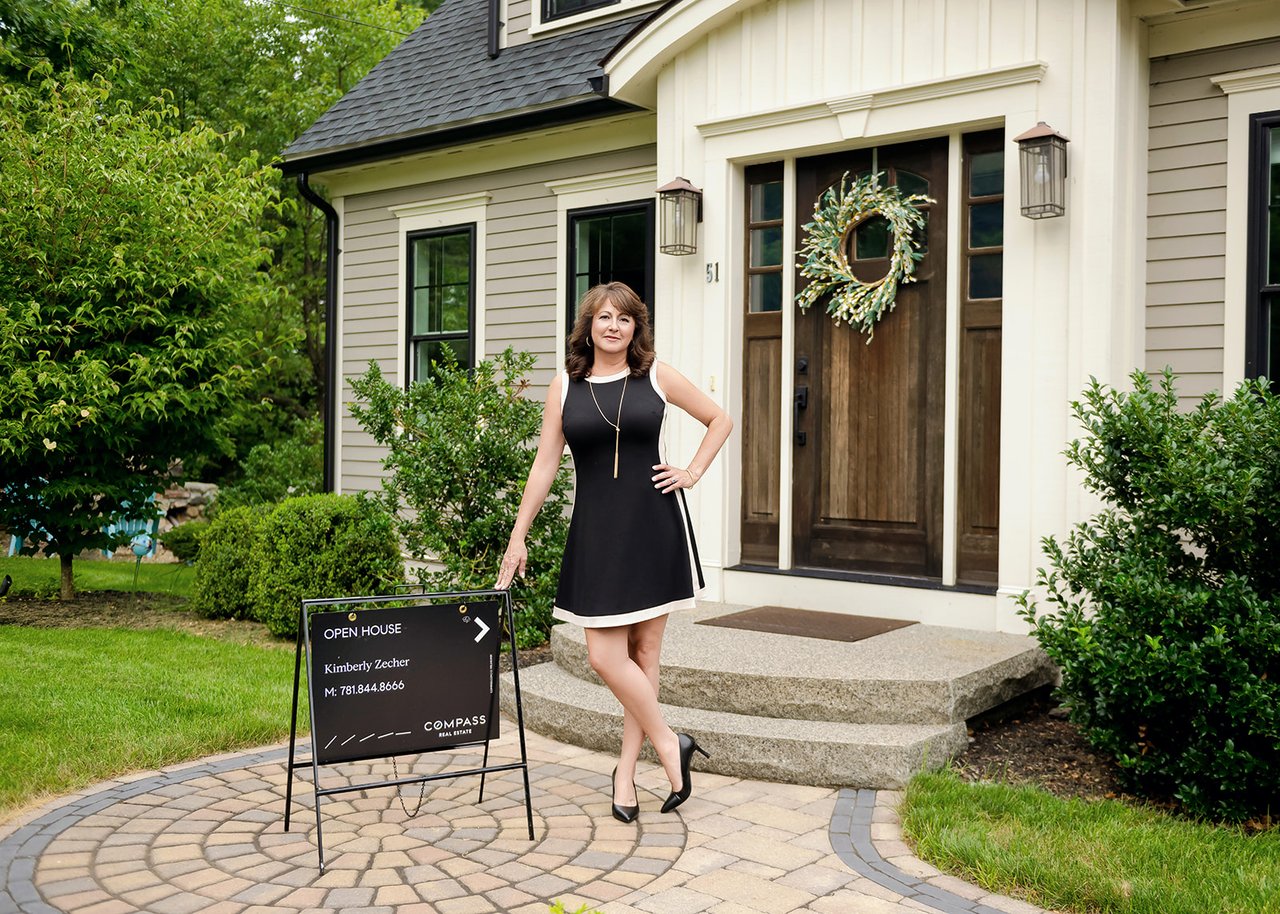
That is where experienced guidance can make a difference. With strong local knowledge north of Boston and seller-side insight that helps buyers compete more effectively, Kimberly Zecher helps clients approach the process with clarity, discipline, and confidence.
If you’re thinking about your first purchase in Reading, North Reading, Wilmington, or Andover, Kimberly Zecher can help you compare your options and build a smart plan for your next move.
Stay up to date on the latest real estate trends.

Work with a dedicated real estate professional who understands the Massachusetts and New Hampshire markets. From start to finish, you’ll get expert guidance, clear communication, and a strategy tailored to your goals.